


Exposed to Bed Bugs? Here’s Exactly What to Do When You Get Home
Maybe your kid’s summer camp called to say a nearby cabin found bed bugs. Maybe you woke up with mysterious bites after a hotel stay. Maybe you found out after you got home that your vacation rental had an infestation.
First things first: don’t panic.
Finding out you’ve been exposed to bed bugs is enough to send anyone into a late-night Google spiral, but taking a few smart steps right away can go a long way toward keeping them from coming home with you.
Here’s exactly what we’d do.
Before Anything Comes Inside
If you suspect your luggage or belongings may have been exposed, keep everything outside, in the garage, or another contained area until you can deal with it.
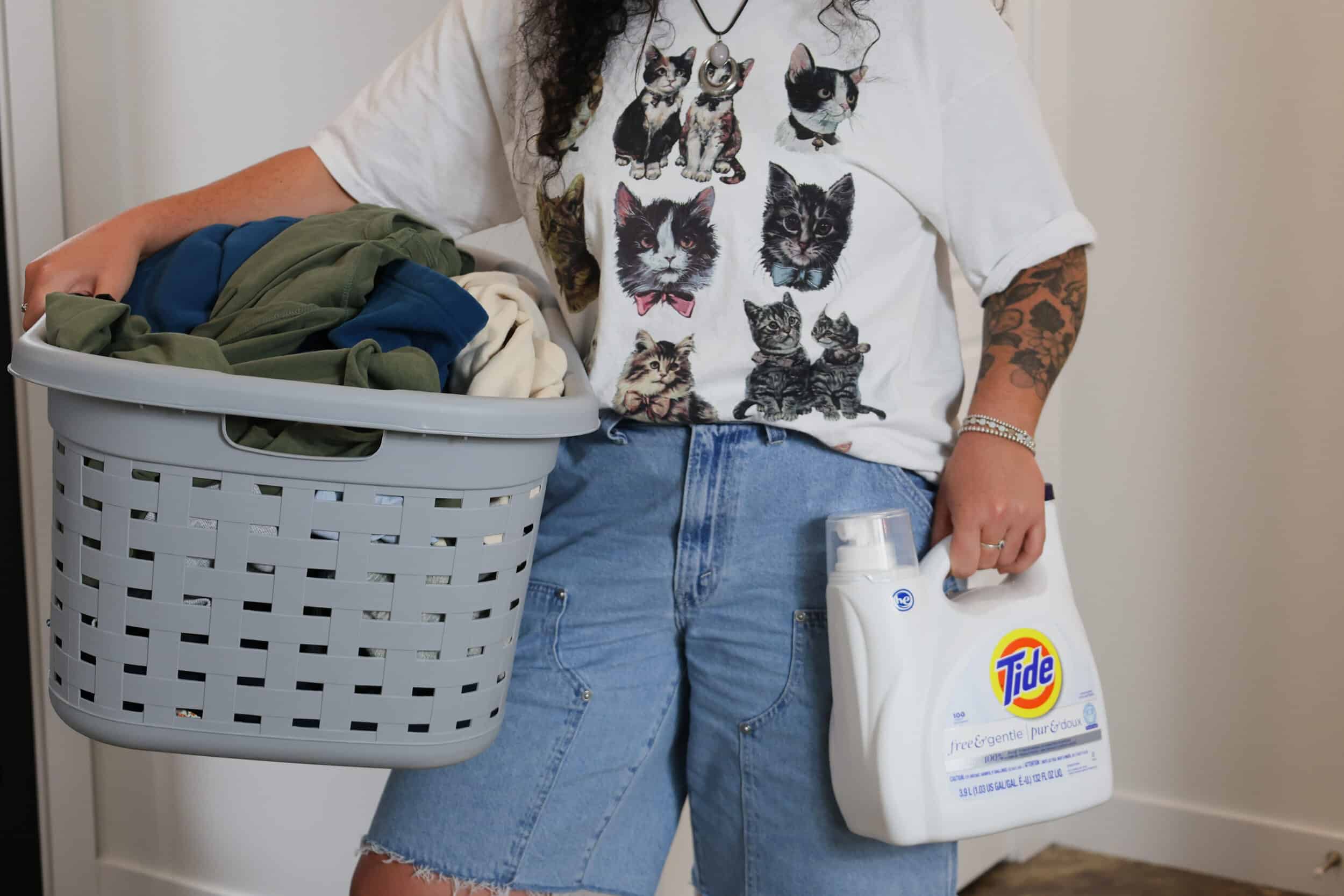
If possible, unpack your bags outside. As you go, sort clothing into lights and darks (or however you normally do laundry) and place each pile into its own garbage bag. That way, you can bring one bag inside at a time, empty it directly into the washer, and keep the rest contained while you work.
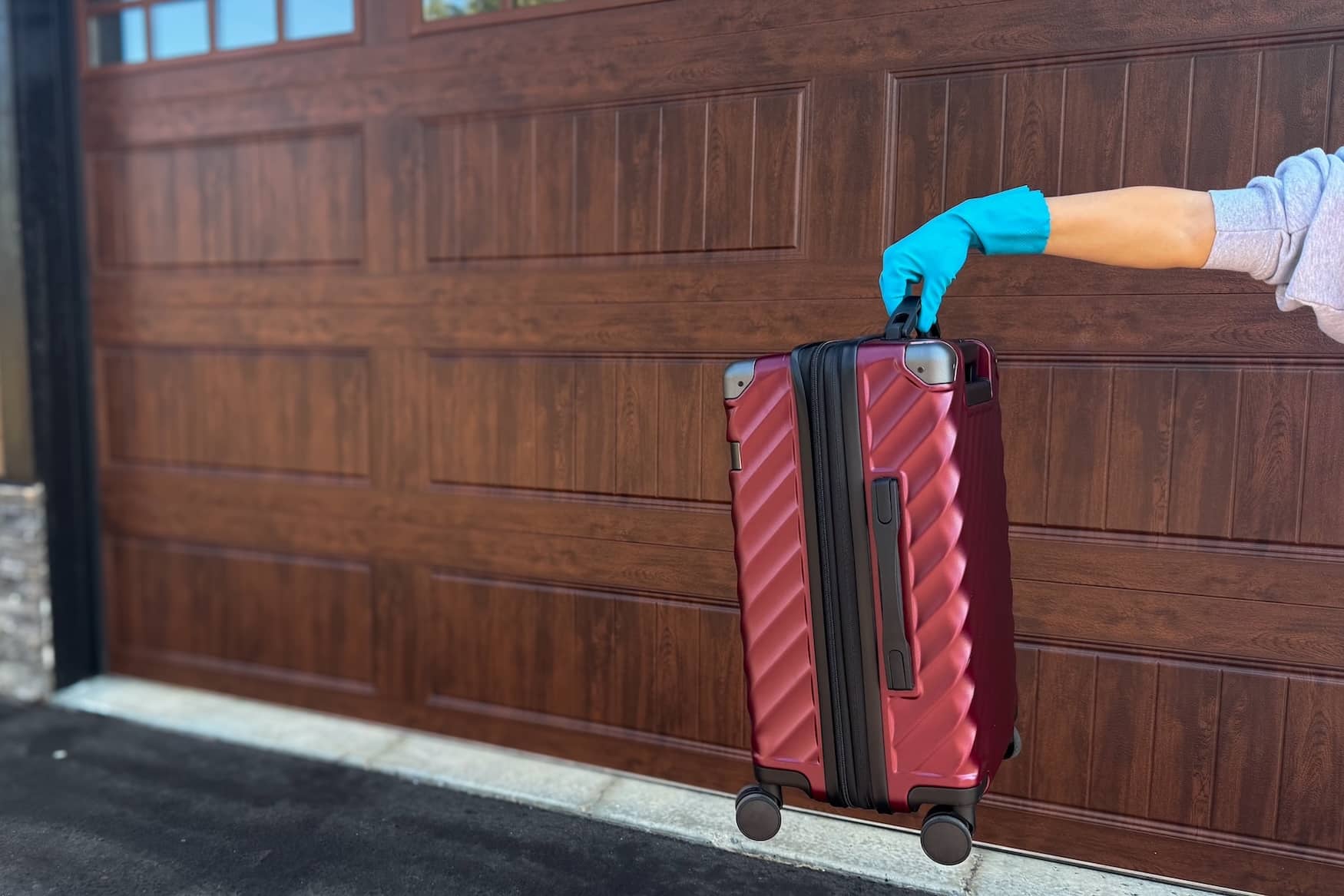
Once you’ve emptied the suitcase, duffel bag, or backpack, set it aside for cleaning before bringing it into the house. Check seams, pockets, zippers, handles, and wheel housings for any signs of bed bugs. We’ll cover exactly how to clean your luggage later in this article.
Leave:
- Suitcases
- Duffel bags
- Backpacks
- Sleeping bags
- Pillows
- Shoes
outside while you make a plan.
Bring one garbage bag inside at a time, empty it directly into the washer, then head back outside for the next load. It takes a little longer, but it keeps the rest of your belongings contained while you work.
Strip Down and Shower
Before heading inside, change out of the clothing you were wearing if possible.
If you’re at home, take your clothes off outside or in the garage and place them directly into a garbage bag or straight into the washer.
Then head inside and shower.
Here’s the good news: bed bugs don’t live on people the way lice do. They don’t burrow into your skin or hide in your hair. They’re hitchhikers, and they prefer to hide in belongings, clothing, bedding, and luggage rather than on your body.
Laundry Is Your Best Friend
When it comes to bed bugs, heat is what kills them, not the wash cycle itself.
For washable items:
- Wash according to the care label if they’re dirty.
- Dry on the highest heat the fabric can safely tolerate for at least 30 minutes after the dryer reaches full temperature. Thick items like sleeping bags or comforters may need closer to 60 minutes.
- Don’t overload the dryer. Heat needs to circulate through the load to be effective.
If an item is already clean, you can often skip the wash entirely and put it straight into the dryer.
Items to process include:
- Clothing
- Pajamas
- Towels
- Hats
- Stuffed animals
- Pillowcases
- Sleeping bags
- Backpacks or fabric bags (if the manufacturer says they’re dryer safe)
What About Things That Can’t Be Washed?
Not everything belongs in the washing machine.
For items like:
- Shoes
- Luggage
- Helmets
- Camping gear
- Backpacks that aren’t dryer safe
Start by inspecting seams, pockets, zippers, and folds carefully. Bed bugs like tight hiding places.
Vacuum thoroughly, paying close attention to seams and crevices.
If the item is dryer safe, a hot dryer is still your best option. If not, inspect it carefully and consider storing it sealed until you’re confident it’s clear.
If you can’t deal with everything right away, sealing items in a garbage bag can help contain any hitchhikers until you have time. Just don’t rely on storage alone to solve the problem. Bed bugs can survive for months without feeding (sometimes close to a year depending on conditions), so simply leaving items bagged for a few days or weeks isn’t considered a reliable way to kill them. Whenever possible, use heat, careful inspection, and vacuuming instead.
Hard Surfaces Don’t Need to Be Disinfected
Plastic water bottles, flashlights, toiletries, phones, chargers, and other hard items don’t need to be scrubbed with special cleaners.
Instead:
- Inspect cracks and seams.
- Wipe surfaces clean.
- Vacuum crevices if needed.
Bed bugs aren’t attracted to hard, smooth surfaces. They’re looking for tiny protected hiding places.
Give Your Luggage Some Extra Attention
Suitcases deserve their own section because they’re one of the most common ways bed bugs hitch a ride home.
After the suitcase is empty and inspected:
- Vacuum every seam, zipper, pocket, handle, and wheel housing.
- Empty the vacuum immediately afterward.
- If the material allows, use a handheld steamer slowly along the seams.
- Store it away from bedrooms until you’re comfortable it’s clear.
Don’t Forget the Car
If your potentially exposed bags rode home in the vehicle, give it a quick clean too.
- Remove all luggage and belongings.
- Vacuum the seats, floor mats, cargo area, and cracks where bags were sitting.
- Empty the vacuum afterward.
The good news is that cars generally aren’t an ideal place for bed bugs to establish themselves because they don’t have people sleeping there overnight. The risk is much lower than in a bedroom, but a quick vacuum is worth the peace of mind.
Vacuum as You Go
As you work through your bags, vacuum the areas where you’re sorting.
We like to:
- Vacuum around the washer and dryer after each load.
- Vacuum anywhere bags were sitting.
- Empty the vacuum canister (or dispose of the vacuum bag) immediately into a sealed garbage bag and place it outside.
It’s a simple extra step that helps prevent any hitchhikers from sticking around.
What You Don’t Need to Do
Finding out you’ve been exposed can make you want to clean (or burn) everything you own. Thankfully, that’s usually unnecessary.
You do not need to:
- Throw away your belongings.
- Wash every item in your house.
- Spray your entire home with insecticide.
- Use bug bombs or foggers. These are generally not recommended for bed bugs and can actually make them harder to control.
- Panic because someone briefly sat on your furniture.
Focus on the items that were actually exposed, use heat whenever possible, inspect carefully, and vacuum thoroughly.
When Should You Call a Professional?
If you find:
- Live bed bugs
- Eggs
- Shed skins
- Small black spots that look like ink dots (bed bug droppings)
- New bites that continue appearing after you’ve returned home
it’s time to contact a licensed pest control professional. The sooner bed bugs are identified and treated, the easier they are to eliminate.
How Long Should You Keep Watching?
Even after you’ve finished all the laundry and unpacking, it’s a good idea to stay alert for the next 6 to 8 weeks.
During that time:
- Watch for new bites that appear overnight.
- Check mattress seams and bed frames every week or two.
- Keep an eye out for live bugs, shed skins, or black spotting around sleeping areas.
- If you stored luggage or gear away from bedrooms, inspect it again before putting it back into regular use.
Most people who take quick action after an exposure never end up with an infestation. If you don’t see any signs after several weeks, you can breathe a little easier.
The Bottom Line
Bed bugs are stressful, but exposure doesn’t automatically mean you’re bringing them home.
Contain your belongings, use heat wherever it’s safe, inspect your luggage carefully, vacuum thoroughly, and keep an eye out for signs over the next several weeks.
A little extra work the day you get home is a whole lot easier than dealing with a full-blown infestation later.
Bed Bug Exposure FAQ
Can bed bugs live in your hair?
No. Bed bugs don’t live on people like lice do. They hide in belongings and bedding, not on your body.
Does washing clothes kill bed bugs?
Not on its own. Heat kills bed bugs. Dry items on the highest heat the fabric can safely tolerate for at least 30 minutes after the dryer reaches full temperature.
Can I skip the wash cycle?
Yes. If an item is already clean, you can put it straight into a hot dryer.
Can bed bugs survive in a car?
They can, but it’s uncommon. If exposed bags rode home in your vehicle, vacuum the seats, floor mats, and cargo area for peace of mind.
Should I throw my suitcase away?
Usually not. Vacuum every seam, zipper, pocket, and wheel, then inspect it carefully. Most luggage can be cleaned and reused.
Can bed bugs hide on hard items?
It’s possible, but less likely. Inspect cracks and seams, then wipe hard items clean. They prefer fabric and tight hiding spots.
Should I spray my house just in case?
No. If you haven’t found bed bugs, skip the bug bombs and preventive sprays. Focus on heat, inspection, and vacuuming instead.
How long should I watch for signs?
Keep an eye out for bites or other signs for 6 to 8 weeks after the exposure. If you find live bugs, eggs, shed skins, or black spotting, contact a licensed pest control professional.


We're big on Instagram.
Follow @GoCleanCo for seriously satisfying videos and top-secret tips. Don’t be shy, come say hi.
gocleanco
590 2,583,093
Sarah McAllister
Collabs: [email protected]
Cleaning expert plus I do some other stuff which is always a wild ride
Fruit flies multiplying faster than you can kill them? 🍎🪰
Here’s how to get rid of them AND stop them from coming back.
Comment LINK and I’ll DM you our full fruit fly guide + the Zevo trap I use.
Fruit flies multiplying faster than you can kill them? 🍎🪰
Here’s how to get rid of them AND stop them from coming back.
Comment LINK and I’ll DM you our full fruit fly guide + the Zevo trap I use.
The before-and-afters don’t lie 🫡 ✨
The before-and-afters don’t lie 🫡 ✨
Today we are talking all about mattress protection, pillows, duvets and bedding. Come watch my @amazonlive today at 9 am MTN/11 am EST plus it’s my birthday so come hang out with me in the comment section 🎂
COMMENT LINK and I’ll send you the link to watch via DM. I am also on the Amazon Live Fast Channel today! To watch the Amazon Live channel, just open Prime Video on your TV and search Amazon Live 📺 You can also watch on fire TV channels and the lifestyle section. #ad
Today we are talking all about mattress protection, pillows, duvets and bedding. Come watch my @amazonlive today at 9 am MTN/11 am EST plus it’s my birthday so come hang out with me in the comment section 🎂
COMMENT LINK and I’ll send you the link to watch via DM. I am also on the Amazon Live Fast Channel today! To watch the Amazon Live channel, just open Prime Video on your TV and search Amazon Live 📺 You can also watch on fire TV channels and the lifestyle section. #ad
How to clean sneakers for back to school 👟
How to clean sneakers for back to school 👟
How to clean backpacks; New year, same backpack. 🎒
Step 1: Empty all pockets
Step 2: Spot-treat stains with Dawn Powerwash
Step 3: Gently scrub the backpack with a brush
Step 4: Rinse
Step 5: Wash the backpack in the washing machine with towels or place it inside a laundry bag
Step 6: Follow the drying instructions on your backpack’s tag
How to clean backpacks; New year, same backpack. 🎒
Step 1: Empty all pockets
Step 2: Spot-treat stains with Dawn Powerwash
Step 3: Gently scrub the backpack with a brush
Step 4: Rinse
Step 5: Wash the backpack in the washing machine with towels or place it inside a laundry bag
Step 6: Follow the drying instructions on your backpack’s tag
👀👀👀
👀👀👀
Stain Removal 101 with GoCleanCo
Come watch my @amazonlive today at 12 PM MTN/2 PM EST
COMMENT LINK and I’ll send you the link to watch.
I am also on the Amazon Live Fast Channel today! To watch the Amazon Live channel, just open Prime Video on your TV and search Amazon Live. You can also watch on fire TV channels and the lifestyle section 🧺🫧 #ad
Stain Removal 101 with GoCleanCo
Come watch my @amazonlive today at 12 PM MTN/2 PM EST
COMMENT LINK and I’ll send you the link to watch.
I am also on the Amazon Live Fast Channel today! To watch the Amazon Live channel, just open Prime Video on your TV and search Amazon Live. You can also watch on fire TV channels and the lifestyle section 🧺🫧 #ad
My current top vacuum picks for the home!
Comment LINK and I’ll send it over.
My current top vacuum picks for the home!
Comment LINK and I’ll send it over.